
Carnival Knockdown
Fortune Mine GamesPuzzle
4.91.31K Reviews
- Version
- 2.3.16
- Installs
- 100.00K
- Age Rating
- Everyone
Screenshots
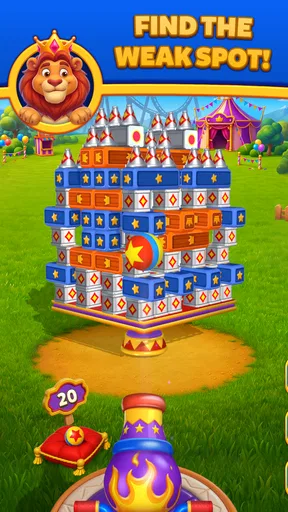
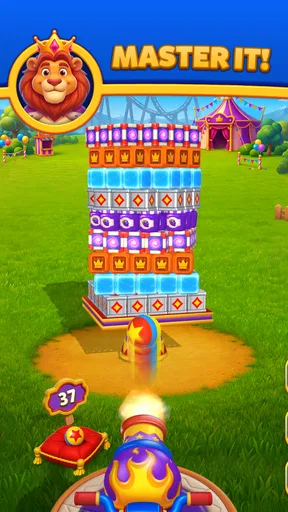
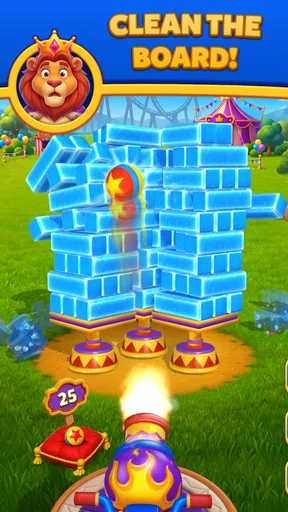
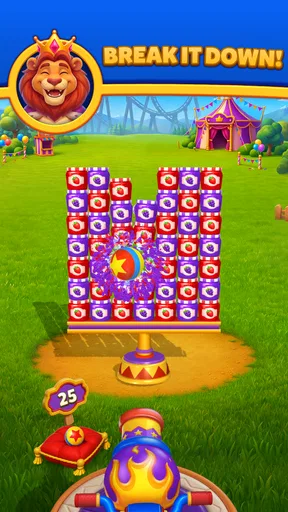
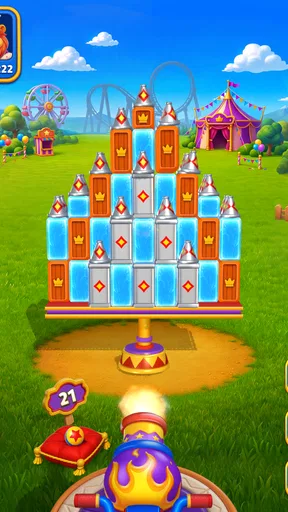
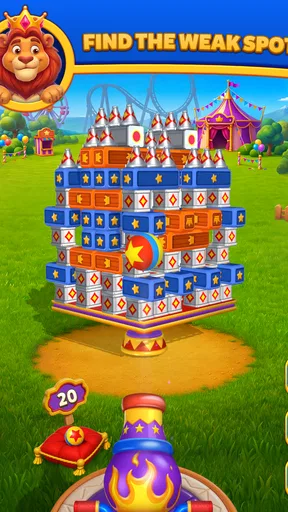
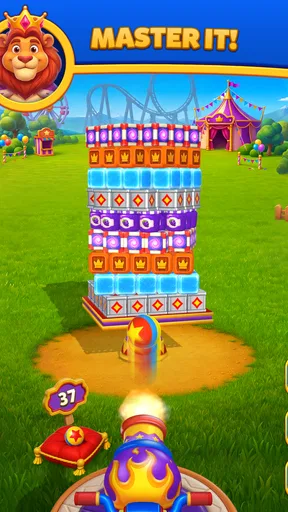
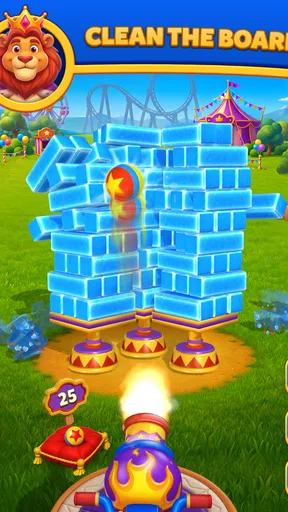
Our Review of Carnival Knockdown
 Analysis by Appyee
I picked up Carnival Knockdown expecting a quick puzzle game and found exactly the kind of experience that works when I have only a few spare minutes. The idea is easy to understand: aim, tap, shoot, and try to topple the carnival targets in front of you. There is no long explanation to get through before playing, which makes the first interaction feel immediate rather than ceremonial.
That simplicity is the main attraction. The game, developed by Fortune Mine Games, focuses on the small satisfaction of lining up a shot and watching a group of targets fall. It is a free puzzle title for Android, rated Everyone, with a current version of 2.3.16 and support starting from Android 9. I would not approach it as a deep strategy game. I see it more as a compact amusement: something to open while waiting for a coffee, sitting on public transport, or taking a short break between tasks.
Why the first few plays feel so accessible
The carnival setting gives the familiar knockdown idea a clear identity. Instead of asking me to learn a complicated board, the game puts the focus on one decision at a time: where to shoot and how to make the impact count. That makes the opening especially friendly for people who want a puzzle game without a tutorial that feels longer than the game itself.
I also like that the basic objective remains readable at a glance. When I return after a few hours away, I do not need to remember a story, a collection of characters, or a chain of special rules. The visual promise is straightforward, and that matters for a game designed around short visits. The best part is the immediate feedback between a tap and the targets coming down.
This makes it a sensible choice for casual players, younger users who prefer uncomplicated controls, and anyone who wants a game that can be understood without studying a guide. The Everyone content rating reinforces that broad approach, although parents should still remember that optional in-app purchases range from $0.99 to $99.99 per item. The game is free to start, but I would keep purchase controls in mind if a child is using the device.
Its average rating of 4.9 from around 9 thousand ratings suggests that the central loop has connected with many players. I do not treat that number as a substitute for playing, but it matches my impression of the opening: Carnival Knockdown knows what it wants to be and gets to that point quickly.
A rhythm that suits interrupted attention
The strongest use case is a fragmented day. Imagine waiting for an appointment with one hand free and only a few minutes before your name is called. A game with lengthy dialogue, a large map, or a real-time match can become awkward in that situation. This one is better suited to a quick attempt because the action is concentrated around the shot itself.
I found the rhythm more comfortable when I treated each round as a small challenge rather than a commitment to a long session. That mindset prevents the game from feeling like another obligation. I can play, put the phone away, and come back later without feeling that I have abandoned a complicated task.
There is also a useful difference between a game that is short and a game that is interruptible. Short games may still punish you for leaving at the wrong moment. Carnival Knockdown is appealing because its basic activity is naturally divided into individual attempts. I would still avoid closing the app during a shot or while the result is resolving, but the overall format is far less demanding than a game that expects continuous attention.
For a lunch break, I would use it in small bursts: play a few attempts, stop before the action starts to feel automatic, and return later. That approach preserves more of the novelty than forcing a long marathon. It is a minor habit, but it makes a real difference with a simple puzzle loop.
What to do when the first obvious shot is not enough
The game becomes more interesting when I stop treating every target as an isolated object. A direct hit may be satisfying, but the better question is whether one impact can affect several targets or create a more efficient collapse. That shift turns the experience from pure tapping into light spatial planning.
My practical advice is to pause for a moment before firing. Look for the target that seems to support or protect others, then consider whether removing it changes the rest of the arrangement. Even without complicated rules, this creates a small layer of decision-making that is easy to miss if I rush through every shot.
Another useful habit is to avoid repeating the same aim automatically after a failed attempt. When a shot does not produce the result I want, I try to identify what the previous angle failed to reach. The game is at its best when I use failure as a visual clue rather than simply tapping again with more speed.
This is one of the more specific strengths of the design: the controls are simple enough for immediate play, but the target layout can still invite a second look. It will not satisfy someone seeking a complex physics simulator or a long-form logic puzzle, yet it gives casual players more to consider than the store summary alone suggests.
Returning after a pause
A good short-session game needs to survive interruption. In my experience, the carnival presentation helps because the core task stays memorable. I do not need to reconstruct a plot or remember a complicated inventory. I can reopen the game and understand the purpose almost instantly.
That makes it suitable for a phone that is used throughout the day rather than reserved for dedicated gaming. I can switch to a message, answer a call, or put the device away when something else needs attention. When I return, I am looking for the next satisfying knockdown, not trying to recover a lost train of thought.
There is a trade-off, though. The same clarity that makes returning easy can make the experience feel light for players who want a persistent world. If your ideal mobile game gives you a large campaign, deep character development, or a strong sense of long-term progression, this is probably not where you will find it. Its value comes from being available, understandable, and pleasant in small portions.
I would also recommend playing with a clear idea of what you want from it. If I open it expecting a substantial evening game, the limited scope becomes more noticeable. If I open it while waiting for something, the compact design feels like a benefit. The game is not failing when it stays simple; simplicity is its reason for existing.
How it compares with other casual puzzle choices
Compared with match-three games, Carnival Knockdown offers less emphasis on building a chain of moves across a grid. Match-three alternatives are often better for players who enjoy planning several turns ahead, collecting boosters, or watching a board transform through repeated combinations. Here, the pleasure is more physical and immediate: choose a point, fire, and observe the result.
Compared with word puzzles, it asks less from language skills and more from visual judgment. That makes it easier to play when I am tired or when I do not want to concentrate on clues. On the other hand, word games usually provide a broader sense of mental variety, while this title stays committed to its carnival knockdown concept.
It also differs from endless runners and action games because the pace is not built around constant movement. I do not need quick reflexes in the same way, and the experience feels calmer. Players who want adrenaline, competitive timing, or a constantly changing environment may find it too restrained. Players who prefer a clear action followed by a visible result may appreciate that restraint.
Physics-based puzzle games can offer more elaborate experimentation, especially when they let players manipulate several objects or build solutions over multiple stages. Carnival Knockdown is more approachable than that kind of game, but it may not provide the same depth. I would choose it for convenience and immediate pleasure, not for a long evening of engineering elaborate solutions.
Replay value: pleasant routine or quick burnout?
Replay value here depends heavily on how much satisfaction I get from refining a simple action. The game can remain enjoyable when I am chasing a cleaner knockdown, testing a different target order, or trying to improve a result that felt almost right. Those small goals give the loop some life beyond the first successful shot.
However, the same loop can become repetitive if I need constant novelty. The carnival theme and knockdown action are appealing, but they do not automatically create endless variety. I would be cautious about recommending it to someone who quickly tires of repeating a familiar gesture. This is a game to dip into, not necessarily one to occupy every free hour.
My best approach is to alternate it with other activities instead of demanding that it provide all my mobile entertainment. A few short sessions spread across the day feel more rewarding than an extended push. That is not a weakness for its intended audience, but it is an important limitation for players who measure value by the number of hours a game can hold their attention.
The install figure, over 100 thousand, shows that it has reached a substantial casual audience. I can understand why: the game communicates its appeal quickly, asks little preparation from the player, and works naturally as a break-time distraction. Still, popularity does not change the basic trade-off. The experience is easy to enter precisely because it does not demand a large investment.
Who should play it, and who should skip it?
I would recommend Carnival Knockdown to someone who wants a free puzzle game with an immediate objective, uncomplicated controls, and a carnival-flavored presentation. It is especially suitable for short waits, low-energy moments, and players who enjoy the small reward of making a well-placed shot.
It is also a good fit for families looking for an Everyone-rated option, provided in-app purchase settings are handled sensibly. The absence of a required price makes it easy to try before deciding whether the loop deserves a place on the phone. Since the title is available as a free game, there is little reason to commit based only on screenshots or a description; a short personal test should tell you quickly whether the rhythm works for you.
I would skip it if I wanted a rich narrative, a large strategic system, wordplay, competitive multiplayer, or a game that constantly introduces new mechanics. I would also look elsewhere if repetition bothers me more than clarity helps me. A deeper puzzle title may offer better long-term value for a player who enjoys planning complex solutions, while a fast action game may be a better choice for someone who wants constant intensity.
One point worth considering is device compatibility. The listed minimum is Android 9, so anyone using an older Android phone should check compatibility before planning around it. For supported devices, the current version is 2.3.16, which is the version I would look for when installing or updating.
My casual verdict
After spending time with it, I see Carnival Knockdown as a focused little puzzle game rather than a full-scale mobile pastime. Its strongest qualities are the quick hook, the readable objective, and the way a single shot can deliver a clear moment of satisfaction. I can open it during a gap in the day, understand what to do, and leave without feeling that I have interrupted a larger commitment.
The limitations are just as clear. The central action can become familiar, and players who need deep progression or constant variation may reach that boundary quickly. The free entry is welcome, but the available in-app purchase range means I would still pay attention to purchase controls, especially on a shared family device.
For me, the right way to enjoy it is in modest sessions. I take a second to study the arrangement, look for a target that can influence others, and treat each attempt as a small visual puzzle rather than a mindless tap. That gives the simple format more replay value and makes the game feel more deliberate.
Carnival Knockdown earns my recommendation for casual players who value interruption-friendly play and immediate feedback above depth. Fortune Mine Games has kept the idea approachable, and that focus is its biggest advantage. I would not call it the best alternative to every puzzle game, but when I want a cheerful, low-commitment challenge that starts working immediately, it is an easy one to keep nearby.
Verdict
Strengths of Carnival Knockdown
- Simple one-touch controls are easy for new players to understand.
- Short rounds make it convenient for quick play sessions.
- Bright carnival visuals give the game a cheerful atmosphere.
- Knockdown challenges provide satisfying physics-based feedback.
- Progressive levels offer a clear sense of advancement.
Limitations of Carnival Knockdown
- Gameplay can become repetitive after extended sessions.
- Some levels may depend heavily on timing and trial and error.
- Ads may interrupt the experience between rounds.
- Limited strategic depth may not satisfy experienced players.
- Performance can vary on older Android or iOS devices.
Other Releases by Fortune Mine Games
View All
Coin Chef
Casual4.6

Wonder Skies
Adventure4.8
Similar Picks in This Category
View All
Block Blast!
HungryStudio4.8

Braindom: Brain Games Test
Lahana Game Studio4.6

AMAZE!
CrazyLabs LTD4.6

Sudoku - Classic Sudoku Puzzle
Oakever Games4.7

Art Puzzle - Puzzle Games
Easybrain4.8

Amaze GO!
Oakever Games4.9
Frequently Asked Questions
What is Carnival Knockdown, and how is the game played?
Carnival Knockdown is a casual arcade game based on the classic carnival challenge of knocking down targets. You typically aim and launch balls or similar projectiles at stacked objects, trying to clear them with as few attempts as possible. The gameplay is easy to understand, making it suitable for short sessions, while later stages may require more careful aiming, timing, and planning.
Is Carnival Knockdown suitable for children and beginners?
Yes, Carnival Knockdown is generally designed to be accessible to beginners and younger players because its core controls are simple and the objective is immediately clear. However, parents should still review the app’s age rating, advertising, and any available in-app purchase settings before allowing children to play. Difficulty, visual effects, and online features can vary depending on the version installed.
Does Carnival Knockdown require an internet connection?
The basic gameplay of Carnival Knockdown may work without a continuous internet connection, which is useful when playing during travel or in areas with limited service. Nevertheless, an internet connection may be required for downloading the game, displaying advertisements, synchronizing progress, receiving updates, or accessing optional online features. It is best to test offline play after installation rather than assuming every function works without internet.
Are there advertisements or in-app purchases in Carnival Knockdown?
Carnival Knockdown may include advertisements or optional in-app purchases, as is common with free casual mobile games. Ads can appear between rounds or after completing a level, while purchases may offer cosmetic items, extra attempts, or ways to reduce interruptions. Before playing extensively, check the store listing and your device’s purchase restrictions, especially if children use the device.
What should I check before downloading Carnival Knockdown?
Before downloading Carnival Knockdown, check that your Android or iOS device meets the required operating-system version and has enough available storage. You should also review the developer information, recent user ratings, privacy details, permissions, and update history in the official app store. Confirm whether your device supports the game smoothly and whether its advertising or purchase model matches your expectations.
Play our best games!


